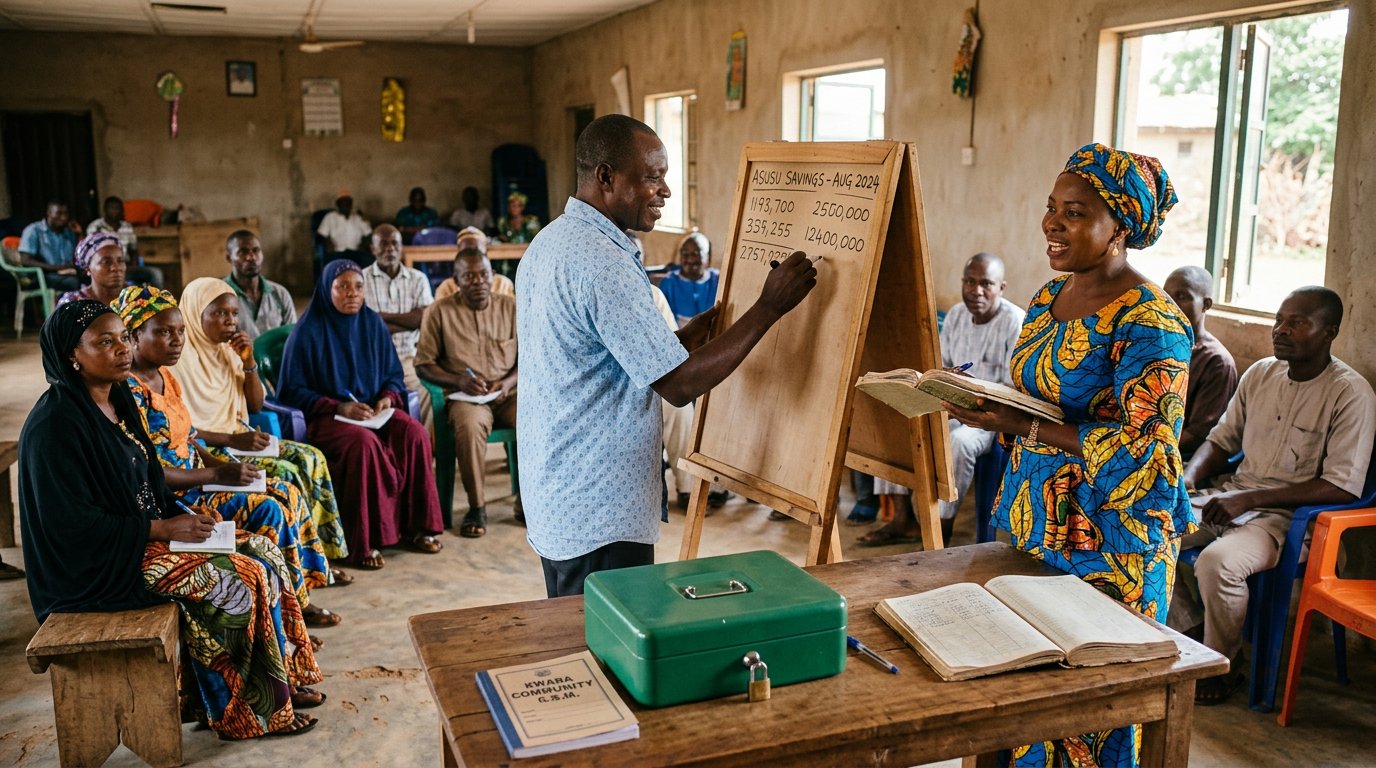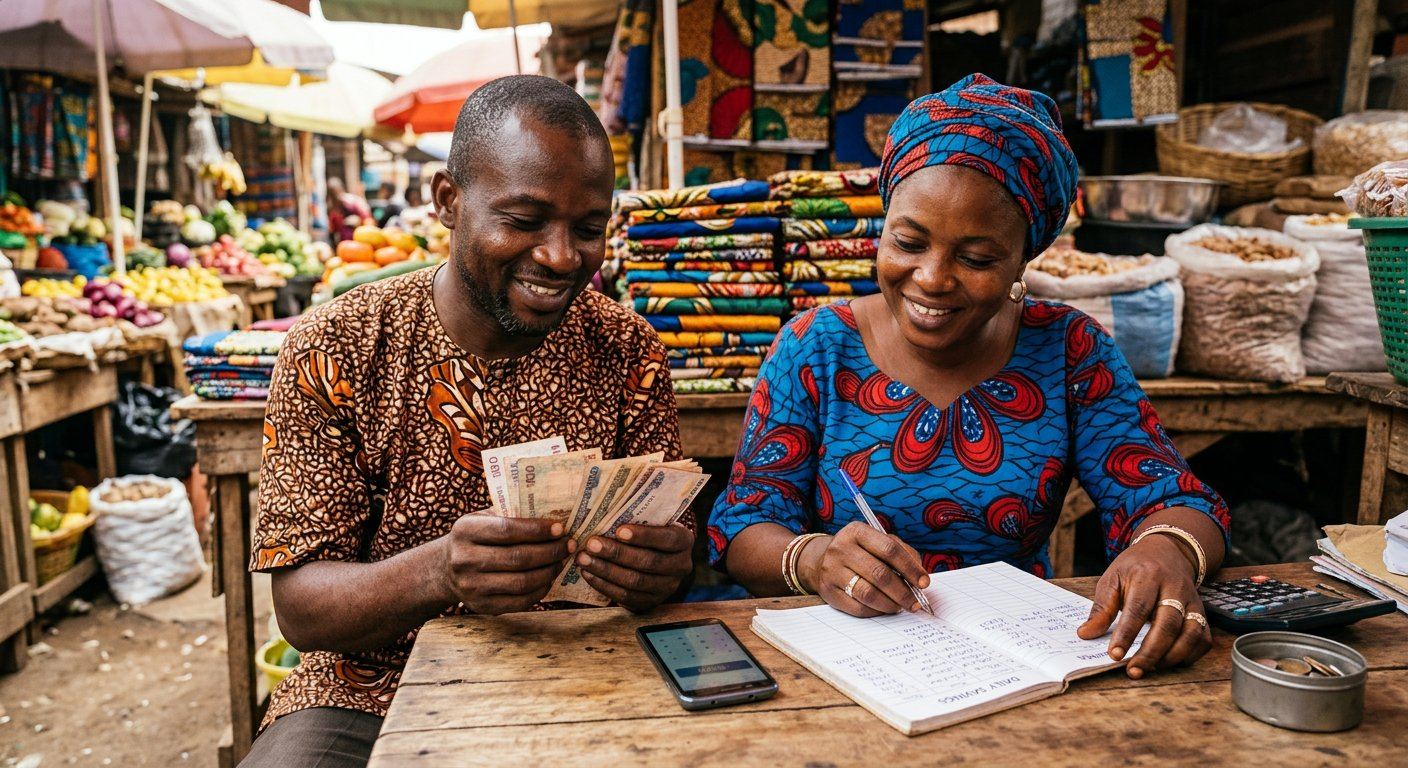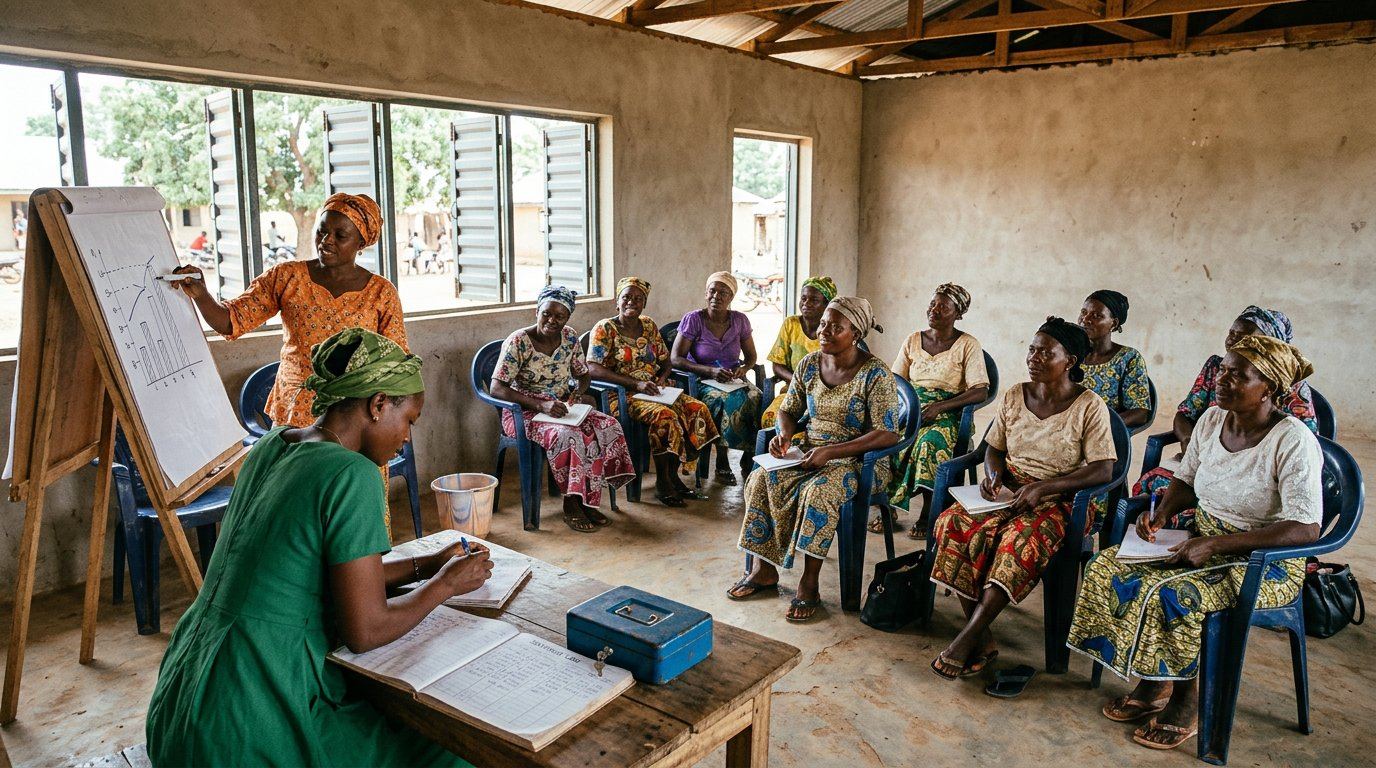

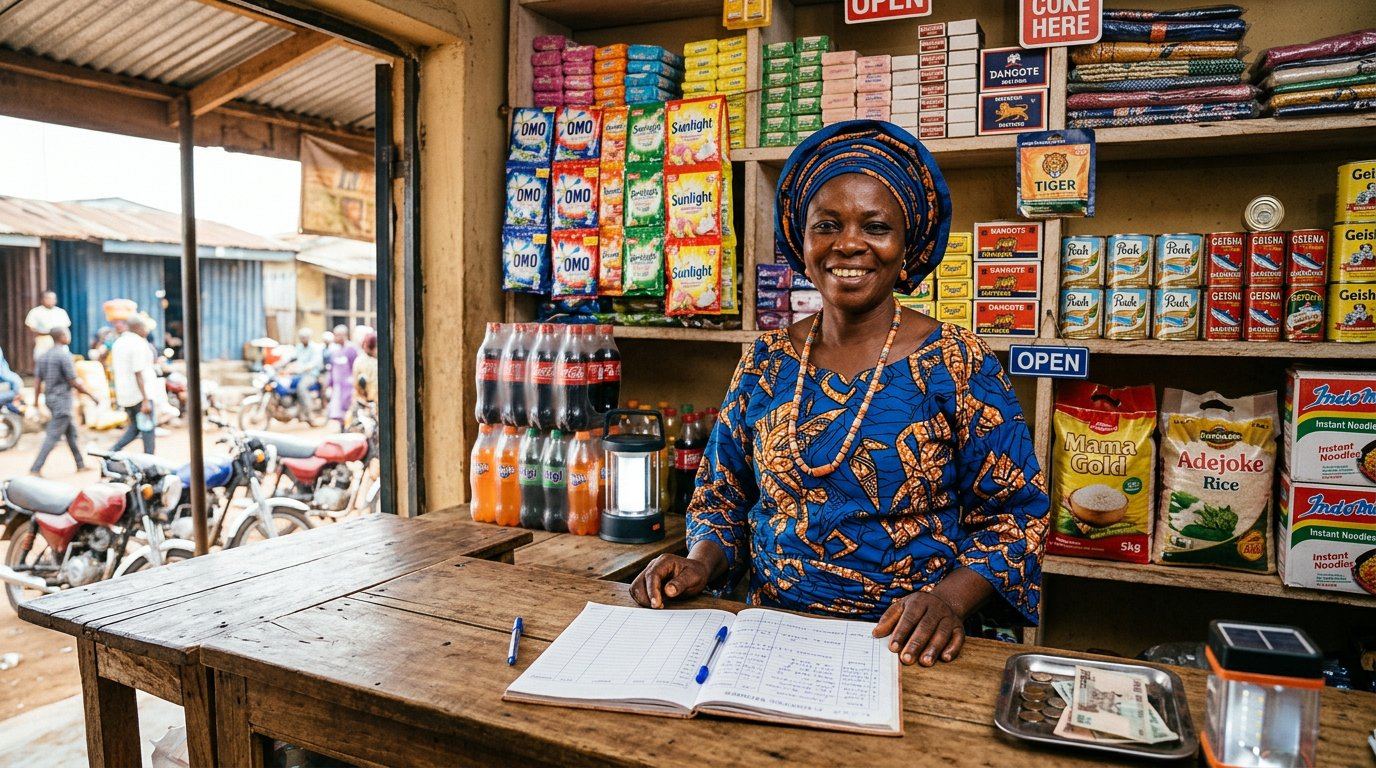
When a small business succeeds, it does more than generate income for the woman who runs it. It feeds a household, pays school fees on time, absorbs a medical bill without a loan, and gives a widow the standing to speak in decisions that affect her children.
The barrier is capital, not ability
The women we meet are not short of experience. Many have traded for years — pepper on a tray, sachet water, second-hand clothing — and understand their market better than any consultant. What they lack is the small amount of capital that turns daily survival into a business that can grow.
What change looks like
Progress is often modest and specific. A widow who now buys a full bag of rice instead of sachets. A tailor who separates business and household money. A trader who keeps a simple record of what she sold and what it cost her.
These changes look small, but they compound. A household that can plan a month ahead can also plan a school year ahead — and that is where a child's education is saved.
That is the kind of change we are built to support.